

A recent Market Watch Report predicts a steadily rising growth rate for Argon usage and prices over the next four to five years because demand is rising in several different industries. Analysts expect the highest increase in demand in the metal manufacturing and fabrication industries, especially steel and additive manufacturing, followed by electronics. Demand is also rising in manufacturing areas like welding, lighting, chemical preservation, photovoltaics, and lab equipment as well. These industries use Argon in various ways for creating inert atmospheres and working environments, as well as other process related needs. Another factor fueling demand is the rising price of helium. As helium prices increase, demand and prices for Argon (a common replacement) are likely to follow.
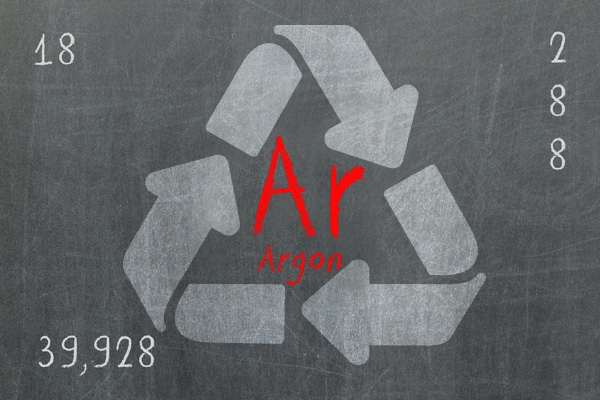
It all sounds great for a speculating investor, right? But how about manufacturers who are increasingly depending on Argon gas? This blog explores the growing market and proposes a unique solution in the form of recycling Argon with a Gas Management System.
Where the Growth Is – Application Sectors
3D Printing and Welding
The metal manufacturing and fabrication segment includes additive manufacturing (also known as 3D printing) and welding. Additive manufacturing is currently growing rapidly and is expected to grow even faster over the next five years. Argon will be crucial to that growth. One of the major challenges in additive manufacturing with metal is minimizing the introduction of impurities into the materials. Argon is used to create a controlled environment for building the metal parts used in segments like the automobile industry and aerospace. Additive manufacturing of reactive metals such as titanium for medical devices is another growth area.
Laser welding, TIG welding, and resistance welding are all growing rapidly and use Argon for the required controllable inert atmosphere. Laser welding and resistance welding are important in the solar energy sector, too. The manufacturing process for thin film solar cells must be done in an inert atmosphere and uses large amounts of Argon.
Lithium Battery Manufacturing and Electronics
Manufacturing and testing of the lithium-ion batteries used in many electronic devices uses Argon for a controlled moisture-free and inert environment. Building the semiconductors used in these electronic devices also requires a controlled environment.
Where the Growth Is – Geographic Regions
North America will continue to be the largest Argon market because of growth in the energy sector, both in solar and in energy conservation. In addition to increased demand for solar cells due to extended government tax cuts, steadily increasing demand for energy saving insulated windows will also fuel demand for Argon, as it’s the gas used to fill the space between the panes of glass.
The fastest growth will likely be in the Asia-Pacific region because of development, urbanization, and infrastructure growth in China and India. Industrialization in Africa and the Middle East will also lead to an expanding Argon market. Building infrastructure means more demand for Argon in applications like welding and metal fabrication. Urbanization means more demand for Argon in lighting.
What Does this Demand Mean for Manufacturers Who Consume Argon?
Supply chain economics suggests that this rapidly growing demand for Argon may outstrip the supply in short order. This could lead to an imbalance, which is likely to lead to higher prices. Transportation costs are also expected to increase because of increasing fuel costs. Both of these factors are likely to make Argon relatively more expensive very soon. And while innovative Argon suppliers are investigating ways to expand capacity to meet the increased demand, they’re also researching new applications to create an even larger market.
Getting Ready for Growth — Inert Solutions
How will you prepare for this change? Upgrading your equipment is the best preparation. Increased demand and price increases mean that it’s time to look at reducing your costs as well as adding capacity. The keys to increasing capacity are efficient and convenient purification and better management of the gas. Large capacity gas purifiers with closed-loop Argon recirculation from Inert can help.
While there’s no prediction for it to be Ar-gone anytime soon. Manufacturers can take steps today to prepare for the future of a disrupted Argon supply chain.